



























Greg Voller, CIO at Netcentrix, considers why AI readiness starts with the right data, security and governance foundations, and why businesses should address these before introducing AI more widely.
AI is rapidly moving from experimentation into everyday business use. According to the Office for National Statistics, AI adoption among UK businesses with 10 or more employees increased from around 12% in late 2023 to 35% in 2026, with improving business operations the most commonly reported purpose among larger adopters.
The opportunities with adopting AI is significant, but so is the need to introduce AI responsibly. Before asking what AI could do for your business, it’s worth asking a more fundamental question; is your data secure, well governed and genuinely ready for AI?
Being secure enough for AI
AI can make information easier to find, interpret and use. That is part of its value, but it also means businesses need to understand exactly what information their people can already access.
There are several common misconceptions that can lead organisations to underestimate what secure AI adoption involves:
- “We can simply switch AI on and start using it.” AI readiness is not just a technology deployment. Your data, permissions, security controls, policies and people all need to be considered.
- “AI is secure because our existing systems are secure.” A secure platform does not automatically mean that every file, folder and data source within it is appropriately protected.
- “If information is confidential, AI won’t be able to find it.” Describing information as confidential is not the same as classifying it, protecting it and limiting access to it.
- “AI going wrong means AI going rogue.” The more immediate risks are often less dramatic: poor governance, excessive permissions, inappropriate use, inaccurate data or employees accepting an answer without sufficient scrutiny.
- “We can address governance later.” Retrofitting controls after AI is already in widespread use is likely to be harder than establishing clear foundations at the outset.
Think about the information distributed across your business from employee records, customer data, contracts, financial details, commercial plans and internal communications. Some of it will be sensitive, but how confident are you that access to it reflects who genuinely needs to see it?
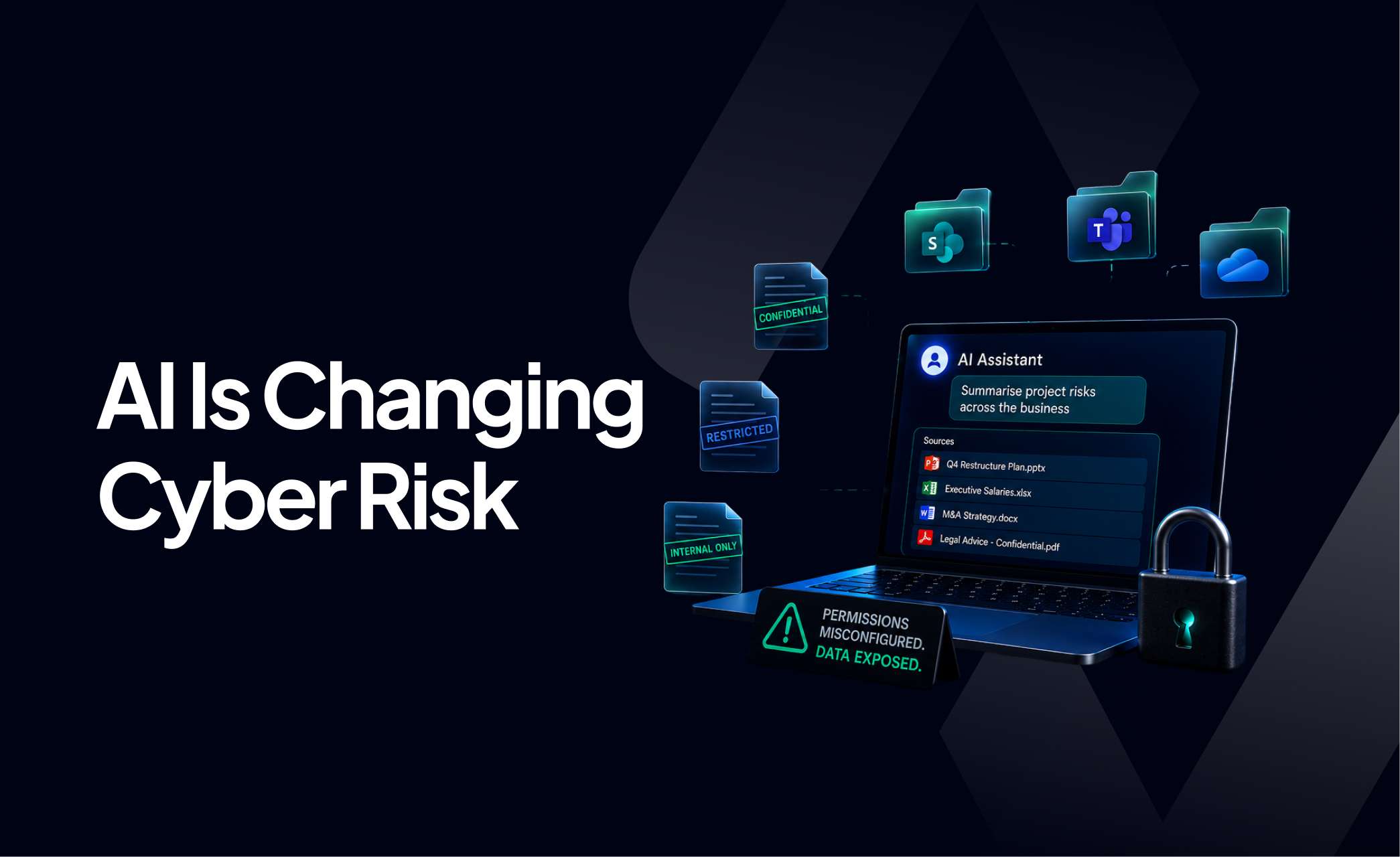
There is an important difference between information a business considers confidential and information it has actually classified, permissioned and protected. AI does not create that distinction, but it can make the consequences of it much more visible.
A document may have been technically accessible for years without anyone knowing where to look for it. Once AI makes finding and summarising information easier, “nobody is likely to find it” is no longer an effective security control.
AI may not create the problem, but it can reveal it
This is not simply a theoretical concern. Microsoft’s guidance recommends establishing a secure and governed data foundation for Copilot, including identifying and remediating oversharing, introducing appropriate guardrails and managing regulatory requirements. Microsoft explains that Copilot can use organisational information users already have permission to access.
That distinction matters. If someone already has access to a document, AI may help them discover and understand it more efficiently. The question is therefore not only whether AI itself is secure, but whether your existing access model accurately reflects how information should be protected.
If your permissions, access controls and data governance are already in good order, you are starting from a much stronger position. If they are not, AI does not necessarily create the underlying data problem. It can, however, bring that problem into much sharper focus. You can read Microsoft’s guidance on creating a secure and governed foundation for Copilot here.
Getting the foundations right
Being ready for AI means understanding:
- where your organisational data is held
- who can access it and whether they still need that access
- how sensitive information is identified and protected
- whether information is accurate, current and appropriately governed
- which AI tools are suitable for your organisation
- how employees are expected to use them, and,
- how AI activity, risk and value will be monitored.
These are not barriers to adoption. They are what make confident adoption possible.
Reviewing permissions, identifying unnecessary exposure and strengthening the protection of sensitive information may not generate the same excitement as demonstrating a new AI tool. But without those foundations, even the most capable technology can create uncertainty rather than value.
The aim should not be to slow AI down. It should be to prevent your governance from having to catch up later.
Once the foundations are right, the conversation can move away from worrying about what AI might expose and towards exploring what it could enable.
Choosing a tool is only one part of the decision
There is no single approach to AI that will suit every business. Microsoft Copilot is one of the solutions we provide to customers, but it is one of many AI tools available, each with different capabilities, data models and security considerations.
Choosing the right technology means looking beyond features and demonstrations. Businesses should also consider:
- where their information is stored and processed
- how the platform uses organisational data
- which users and data sources it can access
- what controls and restrictions are available
- how it fits into the existing technology environment, and,
- whether its outputs can be reviewed, governed and audited appropriately.
The next question is who should have access. Giving every employee the same AI capability from day one may not be the right approach. A phased introduction can help a business test specific use cases, understand the risks, develop appropriate policies and learn where the technology creates genuine value.
AI readiness is not simply about making a tool available, it’s about ensuring that people understand where it can help, where its limitations lie and how to use it safely and responsibly.
Moving forward with confidence
There is a great deal of excitement around AI, and rightly so. Its potential to help businesses improve productivity, support customers and make better use of their information is significant. But adopting the latest technology is not the same as being ready to benefit from it.
For me, readiness means having confidence in your data, security, access controls and AI policies. It means choosing technology that fits your organisation rather than following the market blindly. Most importantly, it means giving people the guidance and education they need to use AI responsibly.
Businesses should not be afraid of AI, but neither should they introduce it without understanding the environment into which it is being deployed. The businesses that benefit most may not be those that adopt AI first, but those that build the strongest foundations for using it well.
At Netcentrix, we help customers understand where they are today, where they want to go and what needs to be in place to get there securely. AI represents a considerable opportunity, but readiness is not measured by how quickly a business switches it on. It is measured by whether the organisation can use it securely, responsibly and with confidence.
So, before asking whether your business should adopt AI, perhaps the better question is what would AI discover about your business if you introduced it today?
This article has been created for educational purposes to share practical guidance around AI readiness. If you would like to discuss what AI readiness means for your business, or better understand where you are on your AI journey, please get in touch.
Greg Voller
CIO, Netcentrix